What Top Social Media Marketing Training Courses in Mohali Actually Teach
-
By Devraj
-
17th August 2026
If you search for social media marketing training or any other IT Training courses in Mohali & Chandigarh, you’ll find plenty of institutes with long course lists and bold promises. But what do these courses actually teach? And more importantly, will the training prepare you to work in a real job, manage a real brand, or run real advertising campaigns?
This post breaks down exactly what a solid course should cover from strategy and content creation to Meta Ads, analytics, and live projects so you can make an informed decision before enrolling anywhere
Ready to launch your career in digital marketing?
Start building your real-world portfolio today.
What is Social Media Marketing?
Social media marketing (SMM) is a key pillar of digital marketing, the overall practice of using online channels, including search engines, websites, social platforms like Facebook, Instagram, LinkedIn, and YouTube, to promote a business, build brand awareness, attract customers, and drive measurable results.
It includes both organic work (content, community management, brand building) and paid work (advertising campaigns, lead generation, retargeting). In 2026, comprehensive digital marketing skills, with a strong focus on social media, are among the most in-demand capabilities, with businesses of all sizes, from local shops to global brands, actively hiring professionals who can manage their online presence.
A digital and social media marketer is not just someone who posts on Instagram. They plan strategy, write copy, design content, run ads, analyse performance, and report results. Good social media and digital marketing training should teach all of this, not just the basics.
What Does Social Media Marketing Training Actually Cover?
Most course brochures list platforms like Facebook, Instagram and YouTube and leave it at that. But the best social media marketing courses in Mohali go much deeper. They teach strategy, advertising, analytics, tools, and real campaign execution.
Here is what quality training should cover across each major area.
1. Social Media Strategy and Audience Research
Good social media marketing starts before you create a single post. Before writing a caption or choosing a filter, a professional needs to understand the business, its audience, and what success looks like.
This module should cover:
- Identifying the target audience: who are you trying to reach, and what do they care about?
- Competitor research: what are competing brands doing, what’s working for them, and where are the gaps?
- Setting marketing goals: awareness, engagement, traffic, leads, or sales?
- Creating customer personas — detailed profiles of ideal customers including demographics, interests, and pain points
- Choosing the right platforms — not every business needs to be on every platform; strategy means choosing where your audience actually is
- Building a social media strategy — a document that ties goals, audience, platforms, and content approach together
- Creating a content calendar — planning what gets posted, when, and why
Practical angle: Students should practise by creating a full social media strategy for an actual or simulated business, not just reading about how strategy works.
2. Facebook and Instagram Marketing
Facebook and Instagram remain the two most widely used platforms for business marketing in India. A social media marketing course in Mohali should cover both in depth.
Instagram Marketing
- Profile optimisation — bio, link-in-bio, highlights, business account setup
- Reels — how to create short-form video content that gets reach and engagement
- Stories — using polls, questions, countdowns, and links for engagement
- Carousels — multi-image posts for storytelling and educational content
- Captions and hashtags — writing captions that drive action, researching hashtags that expand reach
- Engagement strategies — how to grow genuine interaction rather than vanity metrics
- Instagram growth — consistent approaches that build a real audience over time
Facebook training should cover Business Page setup and management, Facebook Groups for community building, cross-posting strategies with Instagram, and the organic reach landscape in 2026.
3. Content Creation and Social Media Copywriting
Posting regularly is not enough. Businesses that post content without a strategy, hooks, or a clear message rarely see results. Content quality is what separates accounts that grow from accounts that stagnate.
This module should cover:
- Writing engaging captions — the structure of a caption that stops someone from scrolling
- Creating hooks — the first line or first frame of content that captures attention
- Content ideas — how to generate content ideas consistently without running out
- Brand storytelling — using content to build a consistent brand identity and emotional connection
- Canva-based post design — designing professional-quality graphics without needing Photoshop experience
- Reels and short-form video — scripting, filming, editing, and publishing short videos for Instagram and YouTube Shorts
- Content calendars — planning content across weekly and monthly cycles
- Content types — educational content (to build trust), promotional content (to drive sales), and engagement content (to build community)
Practical task: Students should create a full week or month of social media content for a sample brand, covering multiple formats and content types, not just screenshots of ideas.
4. Social Media Advertising and Meta Ads
Paid advertising is one of the most valuable skills in any social media marketing course. Businesses spend significant budgets on Meta Ads, and professionals who can plan, run, and optimise campaigns are in high demand.
This module should cover:
- Meta Ads Manager — navigating the platform, understanding its structure (campaigns, ad sets, ads)
- Campaign objectives — awareness, traffic, engagement, leads, conversions — and when to use each
- Audience targeting — core audiences, custom audiences, lookalike audiences
- Ad creatives — image ads, video ads, carousel ads, collection ads
- Ad copy — headlines, primary text, descriptions, and calls to action that convert
- Budget setting — daily vs lifetime budgets, bid strategies, spending efficiently
- Facebook and Instagram campaigns — running campaigns across both placements
- Retargeting — showing ads to people who have already visited your website or interacted with your content
- Conversion tracking — setting up the Meta Pixel, tracking website events, measuring actual results
- Reading campaign results — understanding reach, impressions, frequency, CTR, CPC, CPL, ROAS
Important distinction: Boosting a post and running a structured advertising campaign are not the same thing. Boosting gives Facebook your money with minimal control. A properly structured campaign gives you control over audience, creative, placement, bidding, and measurement. Good training teaches the difference and focuses on proper campaign management.
5. LinkedIn Marketing for Personal and Business Branding
LinkedIn is the most important platform for B2B marketing, professional networking, and personal brand building. It is often undervalued in social media courses, but professionals who understand LinkedIn have a significant advantage.
This module should cover:
- LinkedIn profile optimisation — headline, summary, experience, skills, and featured sections that attract the right attention
- Company page optimisation — building a credible, active company presence
- Personal branding — positioning yourself as a credible professional in your industry
- B2B marketing — using LinkedIn to reach decision-makers, generate business leads, and build partnerships
- Content strategy — what type of content performs on LinkedIn and why
- Networking — how to build a relevant professional network strategically rather than randomly
- Lead generation — using LinkedIn to identify and connect with potential clients or employers
- LinkedIn outreach — writing connection requests and messages that get responses
LinkedIn is especially useful for students pursuing careers in digital marketing agencies, SaaS companies, or professional services and for freelancers looking to attract clients. Courses that skip LinkedIn are leaving a major skill gap.
6. YouTube, Pinterest and Other Social Platforms
A common mistake in social media training is trying to teach every platform to the same depth. Better training teaches students to select platforms based on business goals and audience behaviour, then develop platform-specific skills accordingly.
This module should cover:
- YouTube marketing — channel setup, content strategy, video optimisation, subscriber growth
- YouTube Shorts — short-form video strategy integrated with Reels and TikTok-style content
- Pinterest marketing — visual discovery, pin strategy, boards, and driving website traffic (especially useful for fashion, food, home decor, and lifestyle brands)
- X / Twitter — real-time engagement, trending topics, thought leadership, and customer service
- Emerging platforms — understanding how to evaluate and adopt new platforms as they grow
- Platform-specific content strategies — what works on one platform rarely works identically on another; training should teach this distinction clearly
Students should leave this module able to advise a business on which platforms are worth investing in and which are not right for their goals.
7. Social Media SEO, Hashtags and Discoverability
Social media and search are increasingly connected. Instagram, LinkedIn, Pinterest, and YouTube all function as search engines in their own right. Professionals who understand social SEO have a meaningful edge.
This module should cover:
- Social search — how people search within platforms and how content gets surfaced
- Keyword usage in social profiles — using the right keywords in bios, headlines, and descriptions to appear in search results
- Hashtag research — finding and using hashtags strategically rather than copying a generic list
- Caption optimisation — writing captions that include natural keyword signals without sounding robotic
- Profile optimisation for discoverability — every platform has ranking signals; this module should cover the main ones
- Content discoverability — formats, posting frequency, engagement signals, and their effect on reach
- YouTube SEO basics — titles, descriptions, tags, thumbnails, and watch time as ranking factors
This section connects naturally with the broader digital marketing understanding students will pick up, especially if the course includes any exposure to search engine optimisation, which courses like those at Skill Hives cover across their wider digital marketing curriculum.
8. Community Management and Brand Engagement
The work doesn’t stop when you press publish. What happens after a post goes live matters just as much as the content itself. Community management is a real part of a social media professional’s job.
This module should cover:
- Responding to comments — how to engage authentically and keep conversations going
- Managing DMs — handling enquiries, complaints, and collaboration requests professionally
- Customer interaction — using social media as a customer service channel
- Handling negative comments — what to respond, what to delete, and when to escalate
- Building communities — Facebook Groups, LinkedIn Groups, and Discord as community tools
- Brand reputation — how social media behaviour affects overall brand perception
- Engagement techniques — questions, polls, calls to action, and conversation starters that build genuine interaction
Many students focus entirely on content creation and neglect community management. In practice, brands often value engagement and reputation management just as highly as content output.
9. Influencer and Collaboration Marketing
Influencer marketing has moved from a niche tactic to a mainstream channel for consumer brands. Social media professionals are increasingly expected to plan and evaluate influencer campaigns.
This module should cover:
- Finding relevant influencers — using tools and manual research to identify creators whose audience matches the brand’s target customer
- Micro vs macro influencers — understanding the difference in reach, engagement, and cost, and when each type is appropriate
- Influencer selection criteria — audience size, engagement rate, content quality, audience demographics, and brand alignment
- Collaboration planning — deliverables, timelines, content approval, compensation, and contracts
- Campaign objectives — brand awareness, product launches, traffic, and conversions
- Measuring influencer campaign results — reach, engagements, link clicks, discount code usage, and sales attribution
10. Social Media Analytics and Reporting
How do you know whether your social media work is actually working? This is the question analytics answers. Professionals who can read data, identify what it means, and adjust strategy accordingly are far more valuable than those who simply post content.
This module should cover:
- Reach — how many unique users saw the content
- Impressions — how many times the content was displayed
- Engagement rate — likes, comments, shares, and saves as a percentage of reach
- Follower growth — net new followers over a period, and what drove them
- Click-through rate — how many people clicked a link, button, or bio link
- Leads and conversions — the business outcomes driven by social media activity
- Ad performance metrics — CPC, CPL, CTR, ROAS, and frequency from Meta Ads Manager
- ROI — connecting social media spend and effort to revenue outcomes
- Monthly reporting — building clear, professional reports that communicate results to clients or employers
Tools used for analytics: Meta Insights (for organic content performance), Meta Ads Manager (for paid campaign data), and Google Analytics (for tracking traffic and conversions from social media to website).
11. Tools Used in Professional Social Media Marketing
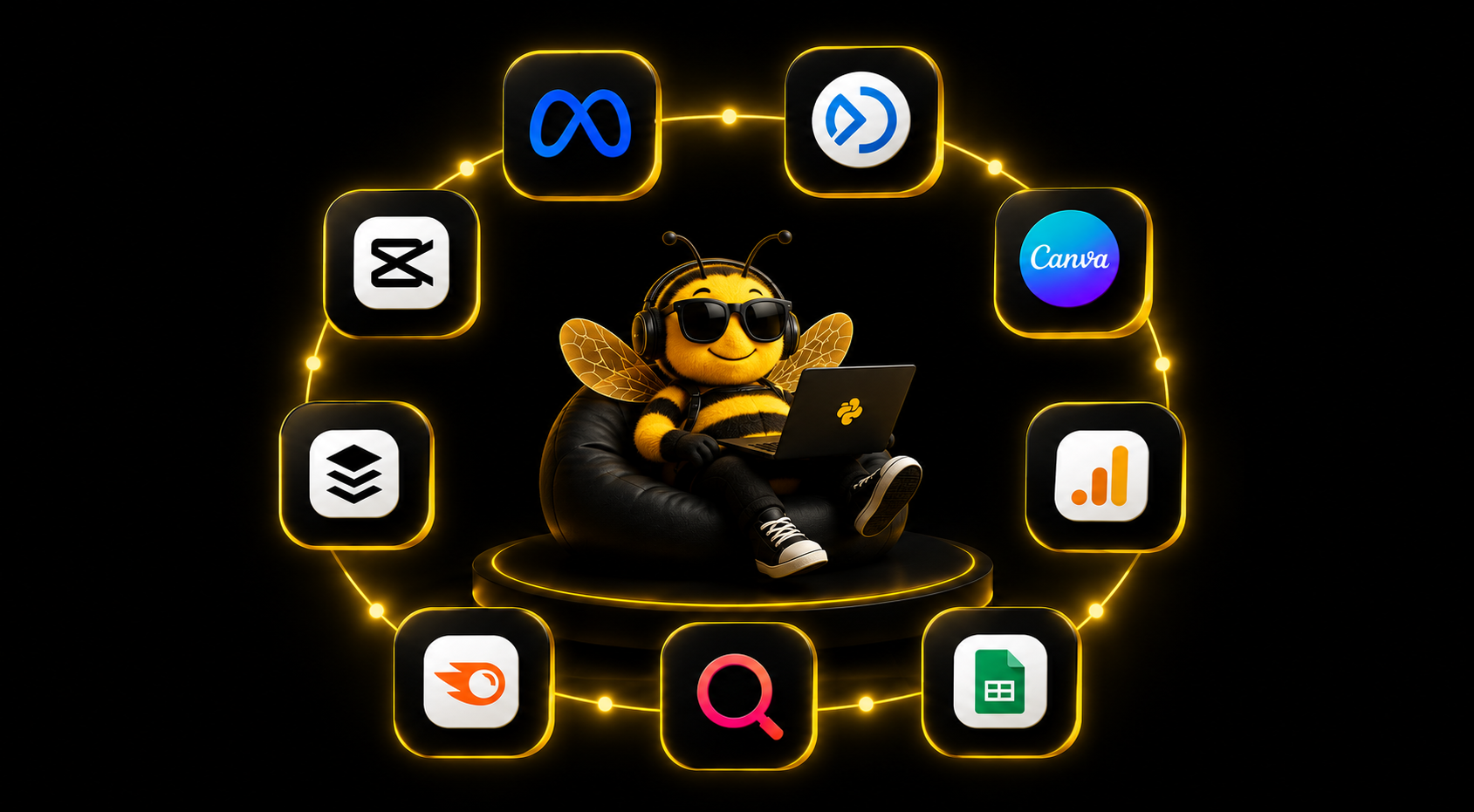 Social media marketers use a range of tools daily. Good training introduces students to these tools in a practical context, not just as a list of features to memorise, but as instruments for achieving real marketing objectives.
Key tools a social media marketing course should cover:
| Tool | Purpose |
|---|---|
| Meta Ads Manager | Creating and managing Facebook and Instagram ad campaigns |
| Meta Business Suite | Managing Pages, scheduling, and inbox across Facebook and Instagram |
| Canva | Designing social media graphics, carousels, and short video templates |
| CapCut / DaVinci Resolve | Editing Reels, Shorts, and short-form video content |
| Buffer / Hootsuite | Scheduling and publishing content across multiple platforms |
| Google Analytics 4 | Tracking social media traffic to websites and measuring conversions |
| Meta Pixel | Installing conversion tracking for ads |
| Semrush / Ubersuggest | Hashtag research, keyword research for social SEO |
| Notion / Google Sheets | Content calendar planning and campaign tracking |
The goal is not to press every button in every tool. The goal is to use these tools to plan smarter, create faster, run better campaigns, and report results clearly.
12. Live Projects and Real-World Campaign Practice
This is where quality training separates itself from average training. You can watch tutorials and read case studies indefinitely, but social media marketing is a practical skill. You learn it by doing it.
Good training should include:
- Creating campaigns for real or simulated businesses — working with actual briefs rather than hypothetical exercises
- Building content calendars — planning a full month of content, not just describing what a calendar looks like
- Designing posts — producing actual graphics, carousels, and short videos using Canva and video tools
- Running test campaigns — managing a small Meta Ads campaign with a real or simulated budget
- Analysing results — reviewing actual platform data and drawing conclusions from it
- Preparing social media reports — presenting performance data in a clear, professional format
- Presenting campaign strategies — pitching a social media plan to a trainer or simulated client
- Building a portfolio — assembling the work produced during training into something you can show employers or clients
What Should a Student Have in Their Portfolio?
By the end of a good social media marketing course, students should be able to show:
- A social media strategy document for a real or sample brand
- A content calendar with planned posts across platforms and formats
- Sample creatives, designed posts, carousels, and a Reel or short video
- An ad campaign, screenshots or a case study of a Meta Ads campaign, including setup, targeting, and results
- An analytics report, performance data interpreted and presented professionally
- A competitor analysis, research on how competitor brands use social media
- A campaign case study, A full summary of a campaign from objective through to results
A portfolio like this demonstrates real competence to any employer or client. It is significantly more credible than a certificate alone.
Why Choose Skill Hives for Social Media Marketing Training in Mohali?
Skill Hives is the training and internship division of Deftsoft, a working digital marketing agency based in Mohali. That distinction matters, students are not learning from textbooks. They are learning from a team that runs real campaigns for real clients.
Social media marketing training at Skill Hives is built around practical, project-based learning. The curriculum reflects what actually happens in agency work and in-house marketing roles — not an idealised version of it.
What Students Can Expect at Skill Hives
- Practical learning from day one — real tasks and live briefs from the start of the course
- Social media strategy — building real strategies for real or sample businesses
- Content creation — writing captions, designing posts, creating Reels, and building content calendars
- Platform-specific marketing — Facebook, Instagram, LinkedIn, YouTube, and more, taught with a focus on what works on each
- Paid campaign concepts — understanding Meta Ads from campaign setup to results analysis
- Analytics and reporting — reading platform data and presenting it clearly
- Real-world assignments — tasks that produce actual portfolio pieces, not just notes
- Portfolio-focused learning — every student leaves with work to show
- Guidance from experienced trainers — taught by practitioners who work in digital marketing daily
Skill Hives also offers industrial training in Chandigarh and Mohali for students seeking structured, certificate-bearing programmes that count toward academic or professional requirements.
Who Can Join Social Media Marketing Training in Mohali?
Social media marketing training is genuinely open to a wide range of people, not just marketing students.
- College students — build a marketable skill before graduation
- Fresh graduates — add a practical, job-ready skill to your degree
- Job seekers — differentiate yourself in a competitive hiring market
- Working professionals — upskill without leaving your current role (ask about flexible schedules)
- Freelancers — develop the skills to manage social media clients independently
- Business owners — learn to manage or oversee your own brand’s social media presence
- Entrepreneurs — build your brand online from the start with real skills
- Career switchers — move into digital marketing from an unrelated field. Students interested in broader technology careers can also explore a Python course in Chandigarh to build complementary programming skills.
No prior marketing experience is required. What matters is a willingness to learn practically and put in the effort on real tasks.
Career Opportunities After Social Media Marketing Training
Completing a social media marketing course opens doors across several roles. These are realistic positions that trained graduates actually get placed into, not inflated job titles designed to make a course sound more impressive.
- Social Media Executive — managing day-to-day content, scheduling, and engagement for a brand
- Social Media Manager — overseeing strategy, content calendar, and team output
- Social Media Strategist — building and presenting social media strategies for businesses
- Content Executive — producing written and visual content across platforms
- Digital Marketing Executive — broader role covering social media alongside SEO, email, and other channels
- Performance Marketing Executive — focused on paid campaigns, Meta Ads, and ROI
- Community Manager — building and managing online communities for brands
- Freelance Social Media Manager — managing multiple clients independently
Experienced professionals in these roles also find that complementary skills—such as a web designing course in Mohali, a graphic designing course in Chandigarh, or broader industrial training in Chandigarh help them take on more responsibility and command better opportunities.
Final Takeaway
A strong social media marketing training course in Mohali should teach students to plan, create, publish, advertise, analyse, and improve social media campaigns—not simply how to post on Instagram. The difference between a professional social media marketer and someone who just uses social media is strategy, advertising knowledge, analytics, and the ability to show measurable results. The right course builds all of these skills through real work, not just theory. If you are looking for training that’s practical, portfolio-focused, and taught by people who work in digital marketing every day, Skill Hives is worth a conversation.
Don’t just post; master strategy, Meta Ads, and analytics
Join our practical, industry-led social media marketing program.
Connect with Skill Hives in Mohali
Frequently Asked Questions
What is taught in a Social Media Marketing course in Mohali?
A good social media marketing course covers social media strategy, audience research, content creation, Facebook and Instagram marketing, Meta Ads, LinkedIn marketing, YouTube, social media SEO, analytics and reporting, community management, influencer marketing, and live project work. The best courses also include portfolio development so students leave with real work to show.
Is social media marketing training suitable for beginners?
Yes. Most social media marketing courses in Mohali start with the basics and build up to professional-level skills. No prior marketing experience is required. What matters is a willingness to learn and complete the practical assignments that make the training valuable.
Does social media marketing training include Meta Ads?
It should. Meta Ads (Facebook and Instagram advertising) is one of the most in-demand skills for social media professionals. Any quality course should cover Meta Ads Manager, campaign setup, audience targeting, ad creative, budget management, and reading campaign results, not just basic post boosting.
Will I learn Instagram and Facebook marketing?
Yes. Instagram and Facebook are covered in detail in quality social media marketing training, including profile optimisation, content formats (Reels, Stories, carousels), engagement strategies, and advertising through Meta Ads Manager.
Are live projects included in social media marketing courses?
At Skill Hives, yes. Live projects and real-world assignments are central to the training. Students create content calendars, design posts, work with real or simulated campaign briefs, analyse performance data, and build a portfolio of work they can present to employers or clients.
Which tools are used in social media marketing training?
Courses typically cover Meta Ads Manager, Meta Business Suite, Canva, CapCut, Buffer or Hootsuite, Google Analytics 4, Meta Pixel, and content planning tools like Notion or Google Sheets. The goal is to use each tool for a real marketing objective, not just learn where the buttons are.
How long does social media marketing training take?
Course duration varies by institute and curriculum depth. Options typically range from 45-day short programmes through to 3-month and 6-month courses. Skill Hives offers multiple duration options, including customised packages for students with specific goals or schedules. Contact Skill Hives directly for current course durations and structures.
What jobs can I get after social media marketing training?
Realistic roles include Social Media Executive, Social Media Manager, Content Executive, Digital Marketing Executive, Performance Marketing Executive, Community Manager, Social Media Strategist, and Freelance Social Media Manager. Career outcomes depend on the depth of training, the quality of your portfolio, and your effort during the course.
Is social media marketing a good career option in 2026?
Yes. Demand for skilled social media marketers continues to grow as businesses increase their digital marketing budgets. The combination of organic content skills and paid advertising knowledge (particularly Meta Ads) makes trained professionals useful across a wide range of industries. Complementary skills in graphic design or web design further strengthen career prospects.
How do I choose the right Social Media Marketing Training in Mohali?
Look for a course that covers strategy, content creation, Meta Ads, analytics, and live projects, not just platform tutorials. Check whether the course includes portfolio development, whether trainers have real industry experience, and whether you will leave with practical skills you can demonstrate. Ask for a detailed syllabus and, if possible, speak with past students.
FAQ Schema
Recent Articles






Devraj
 17th August 2026