September 2026 - Page 2 of 2 - Top IT Training Company in Chandigarh & Mohali - Skill Hives

What Is the Best Course After BCom? Top Career Options in 2027

What Should You Do After BCom?

“You have completed BCom. What should you do next?”

It’s the question every commerce graduate eventually asks themselves, and honestly, there isn’t one single right answer. BCom opens up several career paths, but the course you choose next really depends on a handful of personal factors:

  • Your career goal
  • Your interest
  • Your existing skills
  • Your expected salary
  • The time you have available for learning
  • Whether you want a job, a business of your own, or higher education

Here’s something worth remembering: students don’t always need to limit themselves to the traditional options like M.Com or MBA. Practical options like a 6 month industrial training or skill-based courses can prepare graduates just as effectively, and often faster, for the job requirements that are actually changing around them right now.

Quick Answer: The best course after BCom depends on your career goal. Popular options include MBA, CA, CMA, ACCA, Financial Analytics, Digital Marketing, Data Analytics, and other job-oriented skill courses.

Ready to figure out where you fit?

and talk to a mentor before you commit to any course.

WhatsApp Us

Table of Content

1. What Should You Do After BCom?

2. Career Options After BCom: The Big Picture

3. How to Choose the Best Course After BCom?

4. 10 Best Courses After BCom in 2027

1. MBA

2. Chartered Accountancy (CA)

3. CMA

4. ACCA

5. CFA

6. Data Analytics

7. Digital Marketing

8. Web Development

9. UI/UX Design

10. AI & Machine Learning

5. Quick Comparison: Which Course Is Best After BCom?

6. Which Course After BCom Is Best for You?

7. Why Skill-Based Courses Can Be Useful After BCom

8. Why Choose Skill Hives for Career-Focused Training?

9. How to Choose the Right Training Institute After BCom?

10. Skill Hives Course Selection Guide for BCom Students

11. Common Mistakes BCom Graduates Make While Choosing a Course

FAQs: Best Course After BCom

Final Thoughts

2. Career Options After BCom: The Big Picture

Think of your options as branching into three broad directions:

  • Higher Studies — MBA, M.Com, Finance specialisations
  • Professional Courses — CA, CMA, ACCA, CFA
  • Skill-Based Courses — Digital Marketing, Data Analytics, AI/ML, Web Development, UI/UX Design

All three paths eventually lead toward the same destination: careers in banking & finance, accounting, marketing, business, and analytics. The difference is in how fast you get there, how much you invest, and how hands-on the learning is along the way.

3. How to Choose the Best Course After BCom?

There is no single best course for every BCom graduate. What works for your classmate might be completely wrong for you. Before you decide, sit with these five questions:

Factor Ask Yourself
Interest What type of work do I enjoy?
Career Goal Which job role do I actually want?
Time How quickly do I want to start working?
Budget How much can I realistically invest in learning?
Skills What skills are employers actually asking for right now?

A simple tip that saves a lot of confusion: choose the career first, then choose the course. Too many students do it backwards; they pick a popular course and then try to force-fit a career around it.

4. 10 Best Courses After BCom in 2027

Here’s a mix of traditional professional qualifications and modern, job-oriented skill courses that BCom graduates are actively choosing right now.

1. MBA

Best for: Students interested in management, business, marketing, HR, finance, or entrepreneurship.

Career options: Marketing Manager, Business Analyst, HR Manager, Finance Manager, Business Development Executive

Why choose it? An MBA helps build management and business decision-making skills, which is useful if you’re aiming for leadership-oriented roles down the line.

2. Chartered Accountancy (CA)

Best for: Students who enjoy accounting, taxation, auditing, and finance.

Career options: Chartered Accountant, Auditor, Tax Consultant, Financial Advisor

Why choose it? CA remains one of the strongest options for anyone who wants a long-term, high-respect career in accounting and finance.

3. CMA

Best for: Students interested in cost management, accounting, financial planning, and business decisions.

Career options: Cost Accountant, Financial Analyst, Management Accountant, Finance Executive

4. ACCA

Best for: Students interested in accounting and international finance.

Career options: Financial Accountant, Audit Associate, Finance Manager, Management Accountant

5. CFA

Best for: Students interested in investment, financial markets, and investment analysis.

Career options: Investment Analyst, Equity Research Analyst, Portfolio Analyst, Financial Analyst

6. Data Analytics

Best for: BCom students who enjoy working with numbers, business insights, and technology.

Your commerce background actually gives you a head start here. Combining that foundation with data skills prepares you for roles that revolve around business reporting, data interpretation, and decision-making skills every company needs but very few graduates actually have.

Career options: Data Analyst, Business Analyst, Reporting Analyst, Business Intelligence Executive

How Skill Hives helps: Data Analytics Course by Skill Hives focuses on practical, industry-oriented learning and includes data-focused and technology training within its broader curriculum. The emphasis throughout is on hands-on projects and expert guidance rather than theory alone, exactly what you need if you’re transitioning from a commerce degree into an analytics role.

7. Digital Marketing

Best for: Students interested in marketing, social media, SEO, advertising, content, and online business.

What you’ll learn: SEO, Social Media Marketing, Google Analytics, Paid Advertising, Content Marketing, Digital Strategy

Career options: Digital Marketing Executive, SEO Executive, Social Media Executive, Performance Marketing Executive, Content Executive

How Skill Hives helps: Skill Hives offers Digital Marketing Training with real, hands-on exposure to the tools and platforms companies actually use. Its training approach is built around industry-focused, practical learning, a solid fit for BCom graduates who want to pair their business knowledge with in-demand digital skills.

See yourself in a marketing role?

Learn SEO, Google Ads, and analytics with live projects.

WhatsApp Us

8. Web Development

Best for: Students who want to move from commerce into technology.

You don’t need an engineering degree to build a career in tech. BCom graduates can enter technology-related roles by learning practical development skills that employers actively hire for.

Career options: Web Developer, Full-Stack Developer, Front-End Developer, WordPress Developer

How Skill Hives helps: Skill Hives provides Web Development Training covering full-stack development and multiple technology stacks, with a strong emphasis on live projects and hands-on practice rather than passive lectures.

9. UI/UX Design

Best for: Creative students interested in websites, mobile apps, design, and user experience.

Skills to learn: UI Design, UX Research, Wireframing, Prototyping, Figma, User Experience Design

Career options: UI Designer, UX Designer, Product Designer, UI/UX Intern

Skill Hives includes UI/UX training focused on creating user-friendly digital products, with tools such as Figma built into the training ecosystem.

10. AI & Machine Learning

Best for: Students interested in emerging technology and data-driven careers.

AI is increasingly being used across business, marketing, finance, and customer service which means BCom graduates who understand both business context and AI tools have a genuine edge.

Possible career directions: AI-related roles, data-focused roles, machine learning roles, AI-assisted business applications

How Skill Hives helps: Skill Hives offers AI and Machine Learning training designed for freshers and intermediate learners, with an emphasis on practical technology skills over theory-heavy coursework.

5. Quick Comparison: Which Course Is Best After BCom?

Course Best For Career Direction Learning Type
MBA Business & Management Management Higher Education
CA Accounting & Tax Finance Professional Qualification
CMA Cost & Finance Corporate Finance Professional Qualification
ACCA International Accounting Finance Professional Qualification
CFA Investment Financial Markets Professional Qualification
Data Analytics Numbers & Data Analytics Skill-Based
Digital Marketing Marketing Digital Careers Skill-Based
Web Development Technology IT Skill-Based
UI/UX Creative Students Design & Product Skill-Based
AI & ML Technology AI/Data Skill-Based

6. Which Course After BCom Is Best for You?

A quick decision guide based on what genuinely interests you:

  • Finance & Accounting → CA / CMA / ACCA / CFA
  • Business & Management → MBA
  • Marketing & Social Media → Digital Marketing
  • Numbers + Technology → Data Analytics
  • Coding & Technology → Web Development
  • Creativity & Design → UI/UX
  • Emerging Technology → AI & Machine Learning

7. Why Skill-Based Courses Can Be Useful After BCom

A BCom degree gives you a solid foundation in commerce and business concepts. What it often doesn’t give you is the practical, tool-based experience employers now expect on day one. That’s the gap skill-based learning fills.

Benefits of skill-based learning:

  • Practical, job-relevant knowledge
  • Exposure to industry-standard tools
  • Real project experience for your portfolio
  • A clearer understanding of actual workplace requirements
  • Portfolio development you can show in interviews
  • Exposure to current, in-demand technologies

Skill Hives specifically highlights live projects, practical sessions, expert mentorship, one-to-one guidance, and industry-oriented learning as the core parts of its training approach rather than relying on classroom theory alone.

8. Why Choose Skill Hives for Career-Focused Training?

Since this is a question a lot of BCom graduates end up asking, it’s worth answering directly and honestly.

What sets Skill Hives apart:

  • Industry-focused training
  • Practical, hands-on learning
  • Live project experience with real clients
  • Expert mentorship from industry veterans
  • One-to-one guidance instead of generic batch teaching
  • Personality development and communication training
  • Exposure to industry-standard tools
  • Career-oriented training built around actual job requirements

Skill Hives designs its programs to bridge the gap between theory and practical work. Its training includes live projects, experienced instructors, structured practical sessions, ongoing mentorship, and direct exposure to the tools companies use every day. The training areas span Digital Marketing, Web Development, AI & Machine Learning, UI/UX, and Mobile App Development giving BCom graduates several credible technology-focused directions to explore, not just one.

Not sure which track fits you best?

Get guidance tailored to your BCom background before you enroll in anything.

WhatsApp Us

9. How to Choose the Right Training Institute After BCom?

Before you commit your time and money to any institute, run through this checklist:

  • ☑ Course syllabus
  • ☑ Trainer experience
  • ☑ Practical projects
  • ☑ Course duration
  • ☑ Tools covered
  • ☑ Internship opportunities
  • ☑ Career support
  • ☑ Student reviews
  • ☑ Certification
  • ☑ Demo class

Skill Hives itself recommends this exact approach comparing curriculum, trainers, practical projects, duration, fees, student feedback, career support, and trainer interaction before you enroll anywhere. It’s good advice regardless of which institute you eventually choose.

10. Skill Hives Course Selection Guide for BCom Students

If You Like… Consider
Marketing & social media Digital Marketing
SEO & online growth SEO / Digital Marketing
Numbers & business data Data Analytics
Coding Web Development
Design & creativity UI/UX
AI & emerging technology AI & ML
Business management MBA
Accounting CA / CMA / ACCA

11. Common Mistakes BCom Graduates Make While Choosing a Course

Before you lock in a decision, it helps to know where most students go wrong:

  • Following the crowd: Choosing MBA or CA simply because friends or seniors did it, without checking if it actually matches personal interest.
  • Ignoring timelines: Professional courses like CA or CFA can take several years to complete. If you want to start earning sooner, a skill-based course may fit better.
  • Skipping the practical check: Enrolling in a course without confirming whether it includes live projects, tools, and mentorship theory alone rarely gets you hired in 2027.
  • Not researching the institute: Picking based on advertisements alone instead of checking trainer experience, syllabus depth, and placement support.
  • Underestimating skill-based careers: Assuming that only traditional degrees lead to “real” jobs, while ignoring how fast Digital Marketing, Data Analytics, and AI-related roles are growing across Mohali, Chandigarh, and the rest of India.

Avoiding these mistakes alone can save you months, sometimes years, of misdirected effort.

FAQs: Best Course After BCom

1. What is the best course after BCom?

There’s no single “best” course; it depends on your interest and career goal. MBA, CA, and CFA suit students who want a traditional finance or management path, while Digital Marketing, Data Analytics, and AI & ML suit students who want faster, skill-based entry into the job market.

2. Which course after BCom is best for a high salary?

CA, CFA, and MBA can lead to high-paying roles over time, but they typically require years of study. Skill-based courses like Digital Marketing, Data Analytics, and AI & ML can get you into paying, in-demand roles much faster, with salary growth tied directly to your practical skills and project experience.

3. Can I do a technology course after BCom?

Yes. BCom graduates regularly move into technology roles through courses like Web Development, UI/UX Design, Data Analytics, and AI & Machine Learning. You don’t need a technical degree to start, you need practical, project-based training.

4. Is digital marketing a good course after BCom?

Yes. Digital Marketing is one of the most popular skill-based options for commerce graduates because it combines business understanding with in-demand digital skills like SEO, social media marketing, and Google Ads.

5. Can I learn digital marketing after BCom?

Absolutely. In fact, a commerce background often helps, since you already understand business fundamentals like target audiences, ROI, and market strategy. Digital Marketing training simply adds the practical tools and platforms on top of that.

6. Does Skill Hives offer courses for graduates?

Yes. Skill Hives offers industrial training and internship programs open to graduates from any stream, including BCom, across Digital Marketing, Web Development, AI & Machine Learning, UI/UX, and Mobile App Development.

7. Do Skill Hives provide practical training?

Yes. Skill Hives’ entire training approach is built around live projects, hands-on practical sessions, one-to-one mentorship, and exposure to real industry tools rather than theory-only classroom teaching.

Final Thoughts

If you’ve just finished your BCom and you’re staring at a dozen course options wondering which one is “the best,” here’s the honest answer: the best course is the one that matches your interest, your career goal, and the pace at which you want to enter the job market. Traditional routes like MBA, CA, CMA, ACCA, and CFA are excellent if you’re playing the long game in finance or management. Skill-based courses like Digital Marketing, Data Analytics, Web Development, UI/UX, and AI & Machine Learning are excellent if you want practical, job-ready skills faster.

Whichever direction you lean toward, what matters most is choosing the right training institute that genuinely offers working on practical live projects, real mentorship, and tools you’ll actually use on the job, not just theory in a classroom.

Ready to turn your BCom degree into a career?

and start your industrial training in Mohali with live projects and expert mentorship or to get your questions answered today.
Message us directly on WhatsApp

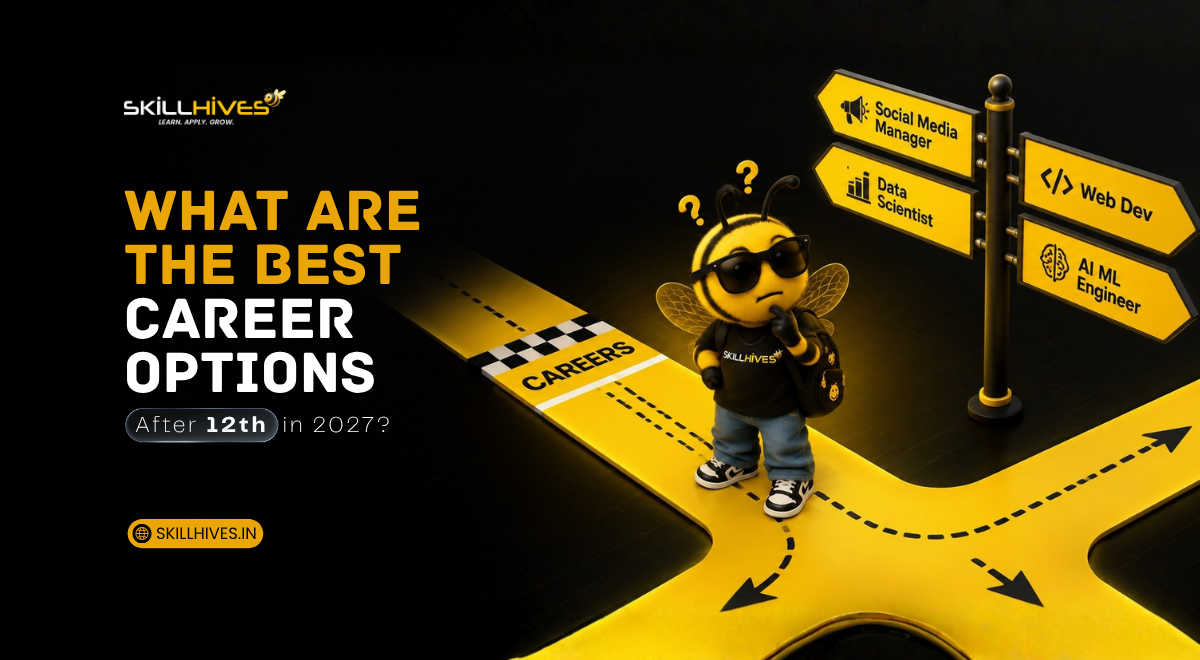
What Are the Best Career Options After 12th in 2027?

Confused About What to Do After 12th? Start Here

If you’re in Class 11 or 12 right now, you’ve probably already felt the pressure of relatives asking “what next,” friends already sure of their plan, and a nagging feeling that you’re supposed to have it all figured out. Here’s the truth: choosing a career after 12th can feel overwhelming precisely because there are more real options today than there used to be, and engineering and medicine are far from the only ones worth considering.

The students who end up genuinely satisfied with their path usually combine three things: solid education, practical skills, and real-world experience, not just a degree sitting on a shelf. That’s exactly where a platform like Skill Hives fits in, offering practical IT training and internship experience built around real, career-oriented learning rather than pure theory.
You don’t need to know exactly what you want to become today. You just need to understand your options.

Still Feeling Overwhelmed?

Talk to someone who can help map out your options.

WhatsApp Us

Table of Content

Career Options After 12th: One Mind Map to See Everything

Best Career Options After 12th Science

Career Options After 12th Commerce

Career Options After 12th Arts: Discover Where Creativity & Ideas Can Take You

Want to Build Skills Instead of Just Collecting Degrees? Here’s Where to Start

From Classroom Knowledge to Real-World Skills: Why Practical Learning Matters

Looking for Practical IT Skills? See What Skill Hives Offers

Learn It. Build It. Practice It. The Skill-Based Career Approach

How to Choose the Right Career After 12th?

Career After 12th: Which Path Sounds Like You?

Don’t Choose Your Career Just Because Someone Else Did

Still Confused? Use This Simple Career Formula

Your Career Doesn’t Start After College. It Starts With What You Learn Today

Frequently Asked Questions

Career Options After 12th: One Mind Map to See Everything

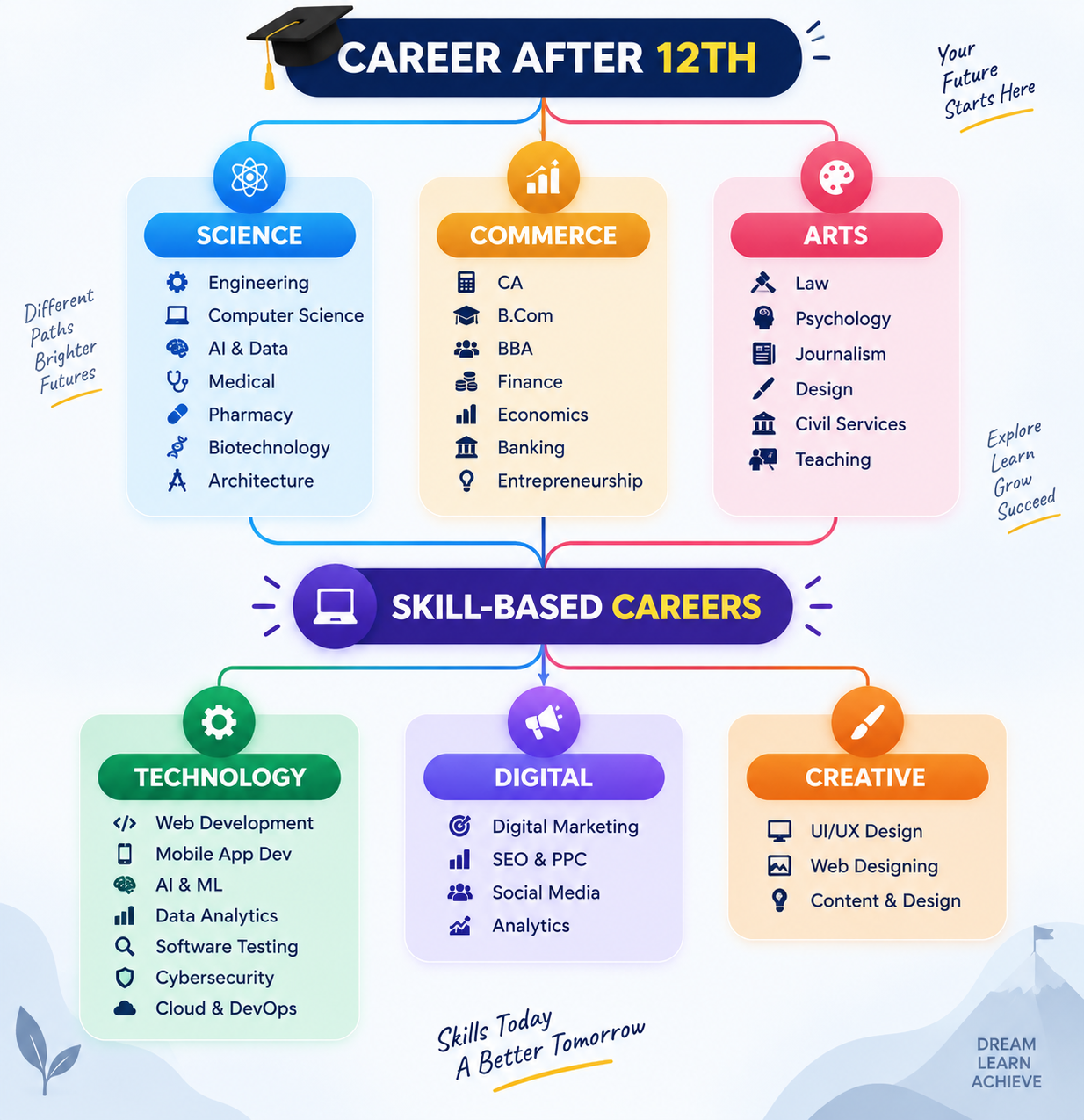
Before diving into details, here’s the entire career landscape after 12th in one view:

Notice that skill-based careers sit underneath all three traditional streams, meaning no matter which stream you’re in, technology and digital skills remain genuinely open to you.
Best Career Options After 12th Science

If you’re from a Science background, your options span engineering, computer science, AI & data science, medical and healthcare fields, pharmacy, biotechnology, architecture, cybersecurity, and various research careers. Each of these builds on the analytical and problem-solving foundation Science students already have.

Science students in particular tend to have a natural head start in technology-adjacent fields, since the same logical thinking that helps in physics or chemistry translates directly into programming, data analysis, and systems thinking. This is exactly why so many Science students end up pairing their core degree with a practical technology skill on the side, rather than treating the two as separate tracks.

Best for students who enjoy: Maths | Biology | Computers | Problem-solving | Research

Career Options After 12th Commerce

Commerce opens the door to Chartered Accountancy, B.Com, BBA, finance, banking, economics, Company Secretary, entrepreneurship, and increasingly, digital business roles that didn’t exist a decade ago.

What’s changed most for Commerce students in recent years is just how much overlap now exists between traditional business education and digital skills. A Commerce graduate who understands digital marketing analytics, for instance, brings a genuinely valuable combination to any business role: numbers plus the ability to actually act on what the data shows.

Student Tip: Commerce can lead to careers in finance, business, management, entrepreneurship, and even modern digital industries; it’s far more flexible than it’s often given credit for.

Career Options After 12th Arts: Discover Where Creativity & Ideas Can Take You

Arts students can explore law, psychology, journalism and mass communication, design, social work, political science, languages, civil services, and teaching and education.

Arts is also where some of the strongest creative-technology careers live. Students who pair an Arts background with skills like UI/UX design or content-focused digital marketing often find themselves genuinely more employable than peers who chose a “safer” stream but built no practical skill alongside it.

Arts doesn’t mean fewer career opportunities. The right combination of education, specialization, and practical skills can open multiple career paths, many of them just as competitive and rewarding as anything in Science or Commerce.

Want to Build Skills Instead of Just Collecting Degrees? Here’s Where to Start

This is where things get genuinely interesting for a lot of students. You don’t have to choose between academics and practical skills; you can build real, in-demand skills alongside your degree, and this is exactly where a shift in mindset pays off long-term.

Think of it this way: a degree tells an employer you completed a program. A genuine, demonstrable skill a working app you built, a website you designed, a campaign you actually ran tells them you can do the job. Increasingly, employers are weighting the second kind of proof far more heavily than the first, especially for entry-level roles in technology and digital fields.

  • Technology: Web Development, Full-Stack Development, Mobile App Development, AI & Machine Learning, Data Analytics, Software Testing, Cybersecurity, Cloud & DevOps.
  • Digital: Digital Marketing, SEO, PPC, Social Media Marketing, Analytics.
  • Creative UI/UX Design, Web Designing, Figma, Digital Design.

These areas closely reflect the kind of practical training available through platforms like Skill Hives, including web development training, mobile app development, digital marketing course, AI/ML, and UI/UX built around real project experience and industry tools rather than pure classroom theory.

Ready to Explore a Skill-Based Path?

See which technology or digital skill actually fits you.

WhatsApp Us

From Classroom Knowledge to Real-World Skills: Why Practical Learning Matters

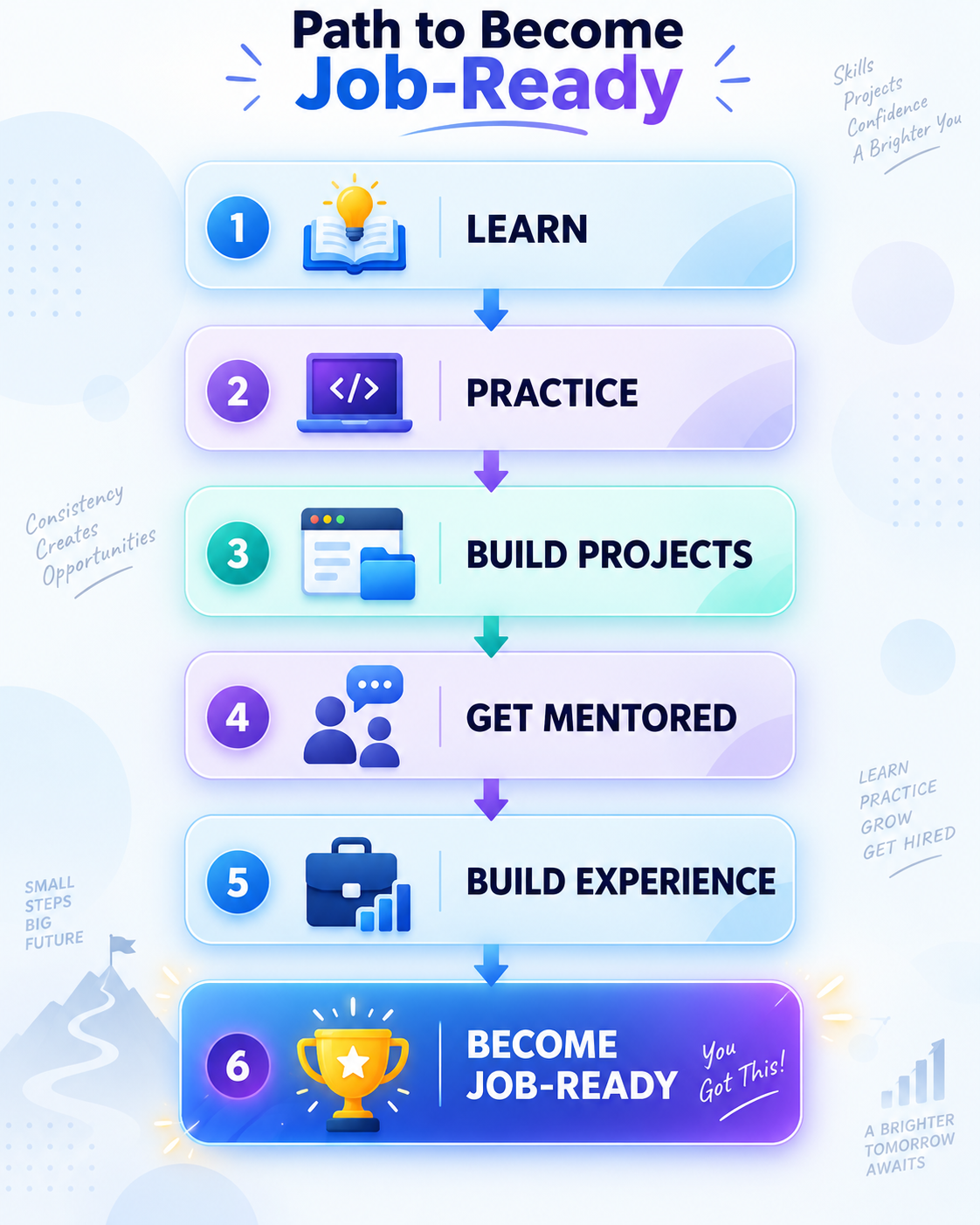
The path that actually builds a career looks like this: Theory → Practice → Projects → Portfolio → Internship → Career. Skipping straight from theory to job applications, with nothing built in between, is exactly why so many graduates struggle to stand out despite having good grades.

This gap shows up most clearly at interview time. A candidate who can only recite what they learned in a textbook struggles the moment an interviewer asks, “Can you show me something you’ve actually built?” A candidate who has even one or two genuine projects, however small has a real, concrete answer, and that difference matters far more to most employers than an extra percentage point on a transcript.

This is precisely the gap Skill Hives is built to close, bridging theory and practice through live projects, hands-on practical sessions, expert mentorship, and genuine industry exposure, rather than stopping at conceptual knowledge alone.

Looking for Practical IT Skills? See What Skill Hives Offers

Skill Area What Students Can Explore
Web Development Front-end, back-end, full-stack
Mobile App Development Android, iOS, cross-platform
Digital Marketing SEO, PPC, social media, analytics
AI & ML Artificial intelligence and machine learning
UI/UX User research, interface design, Figma
Web Designing Website design and practical tools

Skill Hives structures its programs around hands-on projects, industry mentorship, and practical exposure rather than focusing purely on theoretical learning. For students specifically curious about programming, a well-structured Python training program can be an excellent entry point into both web development and AI/ML paths. Students drawn more toward numbers and business insight often find a dedicated data analytics training track more aligned with their interests, while those fascinated by intelligent systems might explore a focused AI/ML course to go deeper into machine learning specifically.

Learn It. Build It. Practice It. The Skill-Based Career Approach

This cycle: not a single course completion certificate is what actually makes someone job-ready. Skill Hives’ approach leans heavily on live projects, practical sessions, one-to-one guidance, expert webinars, and collaborative learning, so students move through each stage of this cycle rather than stopping at “learn.”
Want to Learn Through Real Projects, Not Just Lectures?

Explore a genuinely practical training path.

WhatsApp Us

How to Choose the Right Career After 12th?

Use this simple sequence: Interest → Strength → Skills → Course → Career Goal.
Ask yourself honestly: What subjects do I actually enjoy? What am I naturally good at? What kind of work genuinely interests me? What skills will I actually need to get there? What education or training is required? And importantly, can I gain real, practical experience in this field, or will I be stuck in theory for years before doing anything hands-on?

Notice that this sequence starts with you, not with what’s trending or what pays the most. A career chosen purely by following the highest salary numbers, without any genuine interest or aptitude behind it, tends to feel hollow within a few years, even if it looks impressive on paper.

Career After 12th: Which Path Sounds Like You?

If You Like… You Could Explore…
Maths + Technology Engineering, AI, Data
Biology + Healthcare Medical, Pharmacy, Nursing
Numbers + Business CA, Finance, B.Com
Creativity Design, UI/UX, Media
Communication Law, Journalism, Marketing
Computers Development, AI, Cybersecurity
Digital Business Digital Marketing, SEO, Analytics

If you’re someone who’s drawn to “Creativity” from this table, it’s worth knowing a structured web design course can turn that instinct into an actual, employable skill within months, not years.

Don’t Choose Your Career Just Because Someone Else Did

A few common mistakes worth avoiding entirely:
❌ Choosing because your friend chose it
❌ Choosing only because of salary
❌ Following family pressure without research
❌ Ignoring your own strengths
❌ Selecting a course without understanding it
❌ Focusing only on marks
❌ Ignoring practical skills

Your friend’s perfect career may not be your perfect career.

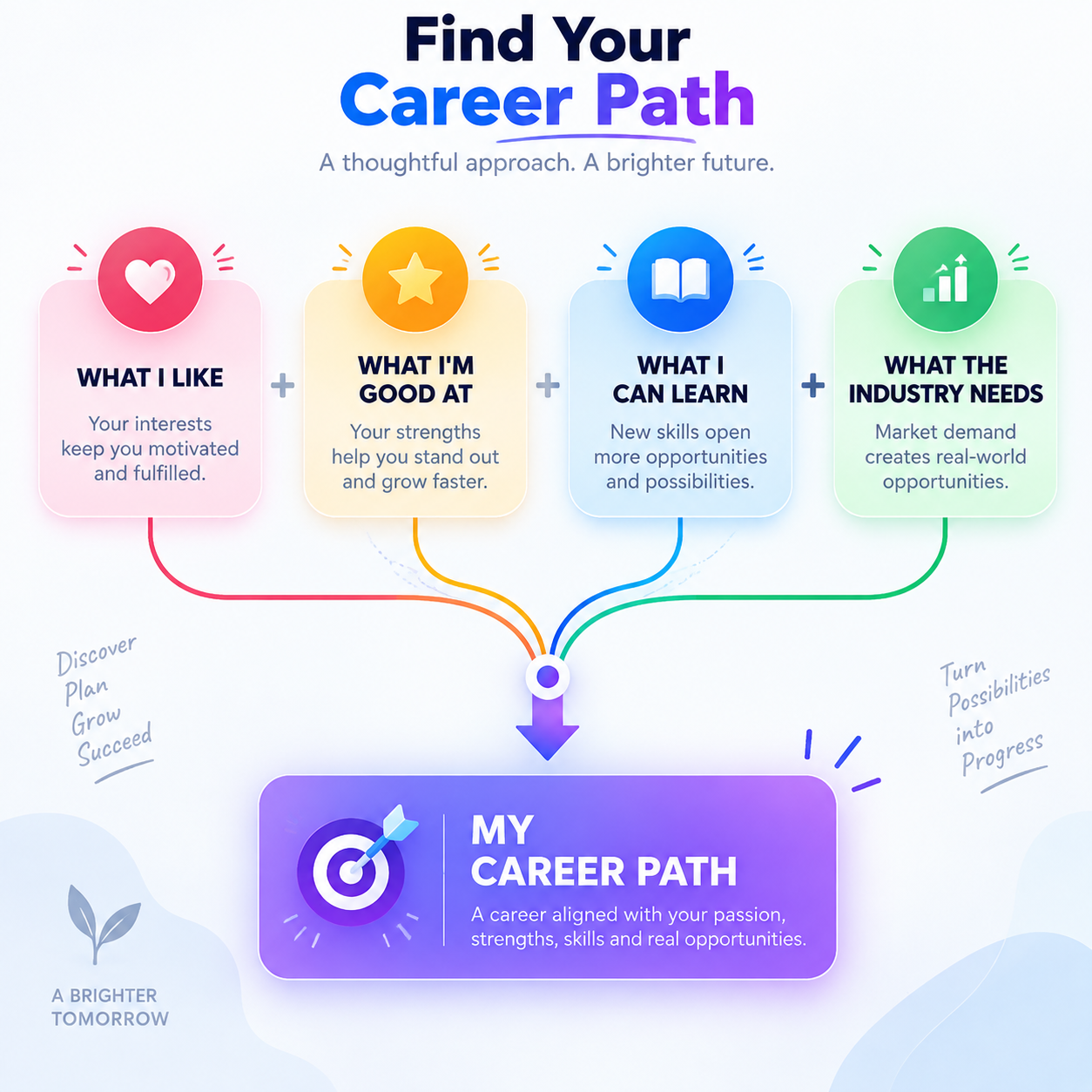
Still Confused? Use This Simple Career Formula

Run your own situation through this formula honestly, and you’ll usually land somewhere far more specific and far more genuinely yours than “whatever seems safe.”
Your Career Doesn’t Start After College. It Starts With What You Learn Today

Here’s the real takeaway for every Class 11 and 12 student reading this: explore before deciding, research before enrolling, and build skills alongside your academics rather than waiting until “later.” Work on real projects. Ask questions. Gain practical exposure wherever you can find it. And don’t be afraid to change direction once you learn more about yourself; that’s not failure, that’s the process working as it should.

If you’re specifically drawn toward practical IT and digital skills, whether that’s a focused Python training program, hands-on web development training, a creative web design course, or deeper data analytics training, Skill Hives is one option worth exploring as a best IT training company for students who want real, project-based learning. For students who want to go deeper before entering the job market, its 6-month industrial training track offers significantly more hands-on depth than a short course alone.

Still confused about your career after 12th? Start with your interests, explore the right career path, and build practical skills that can support your future with Skill Hives.

Ready to Turn Your Interests Into Real Skills?

Let’s figure out the right starting point together.

WhatsApp Us

Frequently Asked Questions

What are the best career options after 12th in 2027?

The best options depend on your stream and interests, spanning traditional paths like engineering, medicine, CA, and law, alongside fast-growing skill-based careers in web development, AI/ML, digital marketing, and design.

What are the best career options after 12th science?

Science students can explore engineering, computer science, AI & data science, medical and healthcare fields, pharmacy, biotechnology, architecture, and cybersecurity.

What are the career options after 12th commerce?

Commerce students can pursue Chartered Accountancy, B.Com, BBA, finance, banking, economics, Company Secretary, entrepreneurship, and digital business roles.

What are the career options after 12th arts?

Arts students can explore law, psychology, journalism, design, social work, political science, languages, civil services, and teaching.

What can I do after 12th if I don’t want engineering or medicine?

Skill-based careers in technology (web development, AI/ML, data analytics), digital marketing (SEO, PPC, social media), and creative fields (UI/UX, web design) offer strong, practical alternatives that don’t require a traditional engineering or medical path.

Can I learn IT skills after 12th?

Yes, students can start learning practical IT skills like web development, digital marketing, or UI/UX design right after 12th, often alongside a degree, through platforms like Skill Hives that focus on hands-on, project-based training.

AI Training in Chandigarh: Courses, Fees, Syllabus & Career Scope

Artificial Intelligence has become one of the most important skills across both technology and business, but most students hit the same wall early on: should you learn AI, Machine Learning, Generative AI, or Data Science? On top of that, you still need real answers on fees, syllabus, duration, eligibility, projects, and career opportunities before actually committing to a course.

This guide covers all of it. And if you’re specifically looking for AI Training in Chandigarh, Skill Hives is one option worth considering alongside anything else you’re evaluating in the Chandigarh/Mohali region, since it offers structured, practical training rather than a purely theoretical curriculum.

Ready to start your AI learning journey?

WhatsApp Us

Table of Content

What Is AI Training in Chandigarh?

Why Should You Learn AI in 2026?

What Does an AI Training Course in Chandigarh Cover?

AI Training in Chandigarh: Course Fees

What Is the Duration of AI Training in Chandigarh?

Who Can Join AI Training in Chandigarh?

Which AI Course Is Best for Beginners in Chandigarh?

How to Choose the Best AI Training Institute in Chandigarh?

What Jobs Can You Get After Learning Artificial Intelligence?

AI vs Machine Learning: Which Should You Learn First?

What Is Generative AI and How Can Beginners Learn It?

AI vs Machine Learning vs Generative AI

AI, ML or Data Science: Which Course Is Right for You?

AI Training in Chandigarh vs Learning AI Online

What Skills Should You Have After AI Training?

How to Build an AI Portfolio After Training?

Why Choose Skill Hives for AI Training?

Frequently Asked Questions

Final Thought

What Is AI Training in Chandigarh?

Quick Answer: AI training in Chandigarh is a structured learning program that teaches students the concepts, tools, and practical skills used to build and work with artificial intelligence systems. Depending on the course, training may cover Python, data handling, machine learning, deep learning, Generative AI, AI tools, and real-world projects.

Artificial Intelligence, in simple terms, is the field of building systems that can perform tasks typically requiring human intelligence recognizing patterns, making predictions, or generating content. A genuine AI course in Chandigarh should combine theoretical understanding with practical, hands-on training, since concepts alone rarely translate into usable skill without real project work. Whether you call it an AI course or simply AI classes in Chandigarh, the same standard applies theory alone isn’t enough.

Python, Machine Learning, and Generative AI are commonly connected with AI learning because they build on each other. Python provides the programming foundation, Machine Learning teaches systems to learn from data, and Generative AI focuses on creating new content using trained models. An Artificial Intelligence course in Chandigarh can benefit students from a wide range of backgrounds, from complete beginners to working professionals looking to add a high-demand skill.

Why Should You Learn AI in 2026?

Growing Use of AI Across Industries

AI is increasingly used across finance, healthcare, retail, and manufacturing, making relevant skills useful well beyond pure tech roles.

AI Skills Can Complement Existing Technical Skills

For developers, analysts, or marketers, AI knowledge often adds directly to an existing skill set rather than replacing it.

Generative AI Is Changing How Businesses Work

From content creation to customer support automation, GenAI tools are being adopted quickly across industries.

Practical AI Knowledge Can Strengthen Your Portfolio

Real AI projects demonstrate applied skill in a way theoretical knowledge alone can’t.

AI Can Be Combined With Web Development, Data Science and Digital Marketing

AI increasingly overlaps with other technical fields, making it a valuable addition rather than a standalone specialization.

It’s worth being direct here: learning AI does not guarantee a high-paying job on its own genuine skill, projects, and continuous learning still matter most.

What Does an AI Training Course in Chandigarh Cover?

Module What Students Learn
AI Fundamentals AI concepts, applications and terminology
Python for AI Python basics, functions, libraries and data handling
Mathematics for AI Basic statistics, probability and mathematical concepts
Data Handling Data cleaning, preparation and exploration
Machine Learning Supervised and unsupervised learning
Deep Learning Neural networks and deep learning fundamentals
Generative AI LLM concepts, AI applications and prompting
AI Tools Practical use of relevant AI tools
Model Evaluation Testing and evaluating AI models
Projects Applying concepts to practical use cases
Portfolio Development Presenting AI projects and skills

Actual module depth and coverage can vary by course duration confirm the specific syllabus directly with the institute before enrolling.

AI Training in Chandigarh: Course Fees

How Much Does AI Training Cost in Chandigarh?

Fees vary significantly by institute, course depth, duration, and practical components; there’s no single fixed number that applies everywhere. Rather than comparing price alone, it’s worth comparing curriculum depth and practical exposure, since two courses labeled “AI Training” can differ enormously in what’s actually included.

Pricing is generally influenced by course duration, whether the curriculum is beginner or advanced level, the number of modules covered, how much practical project work is included, trainer experience, certification offered, placement or career support, whether the format is offline or online, and batch size.

What Should You Compare Before Paying AI Course Fees?

Factor What to Check
Curriculum Does it cover current AI concepts?
Practical Work Are students building projects?
Trainer Relevant industry/teaching experience
Duration Enough time for practice?
Projects Beginner + advanced projects
Certification What does the certificate represent?
Support Doubt solving and mentoring
Career Support Portfolio/interview guidance

Have questions about fees or what’s included?

WhatsApp Us

What Is the Duration of AI Training in Chandigarh?

Training is typically available in 3-month, 6-month, and customized formats depending on your goals and current skill level.

How long does it take to learn AI?

Becoming comfortable with AI fundamentals can take considerably less time than becoming genuinely job-ready in advanced AI or Machine Learning. The actual timeline depends heavily on your prior programming knowledge and how many hours you actually put into practice, not just the course duration on paper.

Who Can Join AI Training in Chandigarh?

College Students exploring a future-focused technical skill early. Engineering Students looking to specialize beyond their core discipline. Computer Science Students building directly on existing programming knowledge. Graduates from any background exploring a technical career pivot. Working Professionals adding AI skills to an existing career. Beginners Interested in AI with genuine curiosity but no formal technical background yet.

Can a beginner learn AI?

Yes most structured courses are designed to start from fundamentals, so no prior AI-specific experience is required, though basic computer literacy helps.

Which AI Course Is Best for Beginners in Chandigarh?

Rather than claiming one course is universally “best,” here’s a framework based on your actual starting point:

For Complete Beginners – look for fundamentals, Python, and guided projects together. For Python Developers look for Machine Learning, Deep Learning, and AI application-focused content. For Students Interested in GenAI look for Generative AI, LLM concepts, and practical AI tool usage. For Data-Focused Students consider a path combining AI, Machine Learning, and Data Science. For Career Switchers prioritize structured learning, mentorship, and real portfolio projects.

Your Background Suitable Learning Path
Complete beginner AI fundamentals → Python → ML
Python learner Python → ML → AI projects
Data Science learner Statistics → ML → AI
Developer ML → Deep Learning → GenAI
Interested in GenAI AI basics → LLMs → GenAI projects

How to Choose the Best AI Training Institute in Chandigarh?

Which Is the Best AI Training Institute in Chandigarh?

Rather than any institute simply claiming to be “the best,” here’s how to actually evaluate one:

Check the curriculum for current, relevant AI content. Look for genuine practical projects, not just lecture-based teaching. Understand trainer expertise and real industry background. Ask about batch size, since smaller batches typically mean more individual attention. Check learning support and doubt-solving availability. Review course duration against your actual goals. Understand exactly what the certification represents. Ask about career support specifics. And confirm the course genuinely matches your current skill level and goal.

Why Consider Skill Hives for AI Training?

Skill Hives offers practical, project-based learning built around industry-relevant skills, with mentorship support and a career-focused approach to training. Its Chandigarh/Mohali location also connects students to the region’s growing IT and tech ecosystem, giving practical training added local relevance. As a broader top IT training company in the region, Skill Hives also connects AI training with related programs like Machine Learning training and data analytics training, useful for students wanting a more well-rounded technical foundation.

What Projects Are Included in a Practical AI Course?

What projects are included in a practical AI course?

Projects matter because they force you to apply concepts directly to real problems, rather than just absorbing theory passively; this is where genuine, demonstrable skill actually comes from.

Project Type Skills Practised
Prediction Model Data preparation + ML
Classification Project Classification algorithms
Recommendation System Data + recommendation concepts
Chatbot NLP/AI concepts
Image Classification Computer vision
Generative AI App LLM/GenAI concepts
Data Analysis Project Python + data handling

A genuinely good AI project includes a real problem, a clean dataset, a clear objective, an actual model or application, proper evaluation, documented results, and clear documentation of the whole process, not just a finished output with no explanation behind it.

What Jobs Can You Get After Learning Artificial Intelligence?

What jobs can you get after learning Artificial Intelligence?

Possible career paths include AI/ML Engineer, Machine Learning Engineer, AI Developer, Data Scientist, NLP Engineer, Computer Vision Engineer, Generative AI Developer, AI Automation Specialist, and Data/AI Analyst.

Does AI Training Guarantee a Job?

No. Training can help build relevant knowledge and projects, but actual employment depends on your skills, experience, portfolio, interview performance, education, and the specific role you’re applying for.

AI vs Machine Learning: Which Should You Learn First?

Artificial Intelligence is the broader field. Machine Learning is a major approach within AI where systems learn patterns from data rather than following fixed rules.

AI Machine Learning
Broader field Subfield of AI
Includes multiple approaches Focuses on learning from data
Covers reasoning, automation and intelligent systems Uses algorithms and data
Includes ML and other techniques One component of AI

Which Should a Beginner Learn First?

A common recommended path: AI fundamentals → Python → Data → Machine Learning → Deep Learning → Generative AI.

What Is Generative AI and How Can Beginners Learn It?

What is Generative AI?

Generative AI refers to AI systems that create new content, text, images, code, and more rather than simply analyzing or classifying existing data. It differs from traditional AI by focusing on generation rather than pure prediction, and it’s closely tied to Large Language Models (LLMs), which are power tools capable of text generation, image generation, AI assistants, and prompt-based applications.

Beginner Learning Path for Generative AI

AI basics → Python basics → Machine Learning fundamentals → LLM concepts → Prompting → AI applications → Projects.

It’s worth being clear that learning to use AI tools well is a useful, real skill but it isn’t equivalent to becoming a trained AI engineer capable of building these systems from scratch.

AI vs Machine Learning vs Generative AI

Technology Simple Meaning Beginner Focus
AI Broad field of intelligent systems AI fundamentals
Machine Learning Systems learn from data Algorithms + data
Deep Learning Neural-network-based ML Neural networks
Generative AI AI that generates new content LLMs + generative models

AI, ML or Data Science: Which Course Is Right for You?

If You Enjoy… Consider
Intelligent applications AI
Algorithms and prediction Machine Learning
Data, statistics and insights Data Science
LLMs and content generation Generative AI
Programming + intelligent systems AI/ML

Quick recommendation: Want broad AI knowledge? → AI. Want predictive modelling? → Machine Learning. Love statistics and data? → Data Science. Interested in LLMs and AI applications? → Generative AI.

AI Training in Chandigarh vs Learning AI Online

Offline Training Online Learning
Direct trainer interaction Flexible schedule
Classroom environment Learn from anywhere
Immediate doubt solving Self-directed learning
Structured routine More flexibility
Peer interaction Wider course options

The better choice genuinely depends on your learning style, schedule, budget, and how much direct support you need along the way.

What Skills Should You Have After AI Training?

Technical Skills: Python, data handling, Machine Learning, basic statistics, model evaluation, AI concepts, and Generative AI fundamentals.

Practical Skills: Problem solving, project development, data interpretation, model testing, documentation, and portfolio building.

How to Build an AI Portfolio After Training?

Build 2–4 genuinely meaningful projects rather than many shallow ones. For each project, document the problem you were solving, explain the dataset you used, walk through your approach, show your actual results, mention the technologies and tools involved, and add the project to a portfolio or GitHub profile where appropriate. A well-documented smaller portfolio consistently outperforms a large pile of unexplained code when it comes to actually impressing an employer.

Why Choose Skill Hives for AI Training?

  • Practical Learning — training built around applying concepts through real exercises and projects, not lecture-only delivery.
  • Industry-Relevant Skills — curriculum connected to current, real-world AI tools and techniques, not outdated material.
  • Project-Based Learning — students practice concepts directly through hands-on project work throughout the course.
  • Mentorship — guided support to help students navigate concepts and career direction as they progress.
  • Career-Focused Approach — portfolio and career preparation built into the training, helping students walk away with more than just a certificate.
  • Ready to start learning AI? Explore AI training options at Skill Hives and choose a learning path based on your current skills and career goal.

Give Your Career a Big Boost With AI

WhatsApp Us

Frequently Asked Questions

What is AI Training in Chandigarh?

It’s a structured learning program teaching students AI concepts, tools, and practical skills, covering areas like Python, Machine Learning, and Generative AI depending on the specific course.

How much does AI training cost in Chandigarh?

Fees vary by institute, course depth, and duration compare curriculum and practical exposure rather than price alone before choosing.

What is the syllabus of an AI course?

A typical syllabus covers AI fundamentals, Python for AI, mathematics for AI, data handling, Machine Learning, Deep Learning, Generative AI, AI tools, and practical projects.

How long does AI training take?

Programs are commonly available in 3-month, 6-month, or customized durations, depending on depth and your existing background.

Can beginners learn AI?

Yes, most structured courses are designed to start from fundamentals, requiring no prior AI-specific experience.

What programming language is used for AI?

Python is the most commonly used programming language for AI and Machine Learning work.

Is Python necessary for AI?

For most technical AI and ML work, yes. For basic use of existing GenAI tools, Python isn’t strictly necessary.

Which is better, AI or Machine Learning?

Neither is “better” AI is the broader field, while Machine Learning is a specific approach within it focused on learning from data.

What jobs can I get after AI training?

Possible roles include AI/ML Engineer, Data Scientist, AI Developer, NLP Engineer, and Generative AI Developer, among others, depending on your specialization.

Is AI a good career option in 2026?

Yes, given its growing use across industries, though success still depends on genuine skills, projects, and continuous learning rather than the course alone.

What is Generative AI?

Generative AI refers to AI systems capable of creating new content such as text, images, or code, rather than only analyzing existing data.

Should I learn AI, ML or Data Science?

It depends on your interest, broad intelligent systems point toward AI, prediction and algorithms point toward Machine Learning, and data-driven insights point toward Data Science.

Final Thought

Choosing between AI, Machine Learning, Generative AI, or Data Science ultimately comes down to your current skills, interests, and career goals, there’s no single universally “right” starting point for every student. What matters most is choosing training that combines real curriculum depth with genuine practical project work, rather than picking based on trend or price alone.

If you’re exploring AI training institutes in Chandigarh options or looking for a best industrial training in Chandigarh , experience that goes beyond AI into a broader technical skill set Skill Hives is worth evaluating using the same criteria covered throughout this guide, including its 6 month training track for students seeking deeper, more comprehensive preparation.

Python, Machine Learning, or GenAI: Which Course Is Right for You?

If you’re trying to enter the AI/tech field, you’ve probably run into the same wall most students do: Python, Machine Learning, and GenAI courses all keep showing up when searching for an IT training company, and all three sound important. Whether you are looking for short-term skill development or a 6 months industrial training program, picking the wrong starting point can make learning harder than it needs to be because these fields serve genuinely different purposes.

This guide is built to fix that confusion. By the end, you’ll know what Python, Machine Learning, and GenAI actually mean, what you’ll learn in each course, who should choose each one, what skills you need before starting, and which learning path is likely to suit you best based on your current knowledge, interests, and career goals.

Ready to fast-track your tech career?

Explore our 6 months industrial training program today!”

WhatsApp Us

Python, Machine Learning and GenAI: What Is the Difference?

Here’s the simple version before we go deeper:

Technology Simple Meaning Main Purpose
Python A programming language Build programs and applications
Machine Learning A way for computers to learn from data Make predictions and decisions
GenAI AI that can create new content Generate text, images, code and more

Python is the foundation a language used to write instructions a computer can follow. Machine Learning builds on that foundation, using code and data together to let a system identify patterns and make predictions rather than following fixed rules. GenAI goes a step further, using trained models to actually generate new content, text, images, code rather than just analyzing existing data.

What Is Python and Why Is It Important for AI?

What Can You Do With Python?

Python is used to build applications, automate repetitive tasks, work with and analyze data, create websites, and increasingly, work directly with AI and ML tools and libraries.

What Will You Learn in a Python Course?

A solid Python training program typically covers variables, data types, conditions, loops, functions, object-oriented programming, commonly used libraries, and hands-on beginner projects to apply everything you’ve learned.

Who Should Learn Python?

Python suits complete beginners, college students, students specifically interested in coding, students planning to eventually enter AI/ML, and anyone simply wanting a solid programming foundation before specializing further.

Do You Need Previous Coding Experience?

No. Python is generally a strong starting point for students who are completely new to programming.

What Is Machine Learning?

Think about how Netflix recommends a movie, or how an online store suggests a product you might like, machine learning is what powers that. It helps systems identify patterns in existing user data and use those patterns to make predictions, without a programmer writing an explicit rule for every possible scenario.

How Does Machine Learning Work?

In simple terms: Data → Training → Model → Prediction.

What Will You Learn in Machine Learning?

A typical ML course covers Python basics, data handling, data preprocessing, core ML algorithms, model training, model testing, prediction, and practical, hands-on projects.

Who Should Learn Machine Learning?

This path suits students interested in AI generally, students who enjoy problem-solving, students drawn to working with data, students who already know basic Python, and anyone aiming toward a technical AI career.

Is Machine Learning Difficult for Beginners?

Honestly, yes more so than basic Python. ML often requires understanding coding, data handling, some statistics, and algorithmic thinking together, which is why it’s usually easier to approach after some programming foundation is already in place.

What Is Generative AI?

What Can Generative AI Do?

GenAI can generate text, create images, generate code, summarize information, help brainstorm ideas, and power entire AI-driven applications built around these capabilities.

What Do You Learn in a GenAI Course?

Depending on the specific course, students may learn generative AI concepts, prompt engineering, how large language models work, working with AI tools and APIs, AI application development, AI automation, and practical, applied projects.

Who Should Learn GenAI?

This path fits students interested in modern AI tools specifically, developers, students interested in building AI-powered applications, anyone curious about LLMs, and students who want to build real, usable AI-driven solutions.

Can You Learn GenAI Without Python?

It depends on your goal. For basic GenAI usage, using existing tools and prompting effectively, Python may not be necessary at all. For technical GenAI development, actually building applications or working with APIs, Python and general programming knowledge become genuinely useful.

Python vs Machine Learning vs GenAI: Complete Comparison

Factor Python Machine Learning GenAI
Beginner Level Easy Moderate Moderate
Main Focus Programming Data & prediction AI content generation
Coding Required Required Depends on course
Mathematics Low Medium/High Depends
Best Starting Point Yes Usually after Python Depends on goal
Good For Coding foundation AI/ML Modern AI applications
Practical Work Programs & automation ML models AI applications
Recommended For Beginners Aspiring ML learners AI-focused learners

Which Course Should You Choose Based on Your Goal?

If You Are Completely New to Coding

Choose Python. It’s the most beginner-friendly entry point, and everything else in AI eventually builds on programming fundamentals anyway.

If You Already Know Python

Consider Machine Learning. You already have the foundation needed to focus on data, algorithms, and model-building without getting stuck on basic syntax.

If You Want to Build AI Applications

Consider GenAI. Skills like prompt engineering, working with APIs, and understanding LLMs will help you build real, usable AI-powered tools.

If You Want a Long-Term AI Career

A common progression looks like Python → Machine Learning → GenAI though this is one possible path, not a compulsory rule everyone has to follow in that exact order.

Which Course Is Right for You? Quick Decision Table

Your Situation Best Starting Choice
I have never coded before Python
I want to learn programming Python
I know basic Python Machine Learning
I enjoy working with data Machine Learning
I want to understand AI models Machine Learning
I want to work with ChatGPT-like technology GenAI
I want to build AI applications GenAI + Python
I want a broader AI learning path Python → ML → GenAI

What Should You Know Before Starting Each Course?

Course What You Should Know Before Starting
Python Basic computer knowledge
Machine Learning Python basics, basic mathematics and data concepts
GenAI Basics Basic AI understanding and willingness to experiment
Technical GenAI Python/programming can be helpful

Keep in mind that prerequisites can vary somewhat from one institute or course to another, so it’s always worth confirming directly before enrolling.

What Skills Will You Build After Each Course?

  • Python Skills — programming logic, problem-solving, automation, application development, and working comfortably with Python libraries.
  • Machine Learning Skills — With ML courses you can build skills including data preparation, model building, model evaluation, prediction, and a real understanding of how different ML algorithms actually work.
  • GenAI Skills — effective prompting, working with AI models directly, AI application development, LLM-based workflows, and AI automation.

What Projects Can Students Build?

Course Example Beginner Projects
Python Calculator, automation tool, simple application
Machine Learning House price prediction, spam detection, recommendation system
GenAI AI chatbot, content assistant, document Q&A tool

Projects matter because they force you to apply concepts directly, rather than just watching lessons passively; this is exactly where real, demonstrable skill actually comes from.

Career Options After Learning Python, ML or GenAI

Learning Area Possible Career Direction
Python Python development, automation, software development
Machine Learning ML, data science, AI development
GenAI GenAI development, AI applications, LLM-based solutions

Important note: Completing a course alone does not guarantee a job. Students also need practical skills, real projects, problem-solving ability, and continuous learning to actually become job-ready.

How Long Does It Take to Learn Python, Machine Learning or GenAI?

Rather than promising something unrealistic like “learn AI in 30 days,” it’s more honest to think in stages: basic understanding, intermediate skills, project-level skills, and finally, job-ready development. How long each stage takes genuinely depends on your prior knowledge, how much you actually practice, and how deep the specific course goes. Two students in the same course can reach job-readiness at very different speeds.

Should You Learn Python Before Machine Learning and GenAI?

Short answer: For students planning a technical AI career, learning Python first can make Machine Learning and GenAI significantly easier to understand.

That said, this isn’t a universal rule. If you only want to explore GenAI tools at a basic, usage level, prompting existing tools rather than building your own applications, you may not need Python first at all.

Common Mistakes Students Make When Choosing an AI Course

  1. Choosing a course only because it’s trending, without checking if it fits your actual goal.
  2. Starting advanced AI without basic programming knowledge, which usually backfires quickly.
  3. Choosing a course based only on salary claims, rather than genuine interest and fit.
  4. Ignoring practical projects, focusing only on watching lessons.
  5. Choosing a course without checking the syllabus in detail first.
  6. Thinking one certificate is enough for a career, without building real, demonstrable skills alongside it.

How to Choose the Right Training Institute

Before choosing where to study, run any institute through this checklist:

Check the Course Syllabus

Does it actually cover the specific skills you want to learn, in real depth?

Look for Practical Learning

Check whether students genuinely work on projects and assignments, not just watch recorded lessons.

Check Trainer Experience

You should understand who’s actually teaching you and how the course is delivered day to day.

Ask About Doubt Support

This matters especially for beginners, who need consistent access to help when they get stuck.

Check Whether the Course Matches Your Level

A complete beginner shouldn’t blindly jump into an advanced course just because it sounds impressive.

Look at the Learning Environment

Consider the class format, how much hands-on practice is built in, and how much real project exposure you’ll actually get.

Why Choose Skill Hives for Your Learning Journey?

Skill Hives takes a practical, project-based approach to technology training, rather than relying purely on theory-heavy lectures. Courses are built to be industry-focused and beginner-friendly, with a genuine emphasis on technical, career-oriented skills, covering areas including Python training, AI, Machine Learning, data analytics training, and other in-demand technology skills.

Students looking to build real, practical experience, not just watch tutorials, get support throughout the learning process, with guidance suited to wherever they’re actually starting from. Skill Hives can be considered by students who want structured technology training with a genuine focus on practical learning and industry-relevant skills, whether you’re just starting with Python or aiming toward a specific AI specialization.

Python, Machine Learning or GenAI: Which One Should You Start With?

Here’s the simplest possible version of the decision:

  • Choose Python if: You’re starting from zero.
  • Choose Machine Learning if: You already know Python and want to understand how machines actually learn from data.
  • Choose GenAI if: You want to explore or build applications using modern generative AI.

Want to build broader AI skills? Python → Machine Learning → GenAI.

You don’t necessarily need to learn everything at once many students start with just one of these, build real confidence, and expand from there once they’ve got a solid footing.

Still unsure which path fits your goals?

Kickstart your Python, ML, or GenAI journey with top-tier 6 months industrial training from a trusted IT training company.

WhatsApp Us

Frequently Asked Questions

Which is better for beginners, Python or Machine Learning?

Python is better for complete beginners, since it builds the programming foundation Machine Learning relies on.

Should I learn Python before Machine Learning?

Yes, for most technical learners, Python knowledge makes Machine Learning significantly easier to understand and apply.

Can I learn GenAI without Python?

For basic usage, yes. For technical GenAI development and building applications, Python and programming knowledge become genuinely useful.

Is Machine Learning harder than Python?

Generally yes, since ML combines coding with data handling, statistics, and algorithmic thinking, while Python alone focuses on programming fundamentals.

Is GenAI suitable for college students?

Yes, especially for students interested in modern AI tools and applications, many GenAI concepts are accessible even without a deep technical background.

Which course is best for an AI career?

It depends on your specific direction: Python for a coding foundation, Machine Learning for data-driven AI roles, and GenAI for building modern AI-powered applications.

What should I learn before Machine Learning?

Basic Python programming, along with some foundational mathematics and general data concepts, makes Machine Learning much easier to approach.

What can I build after learning Python?

Beginner projects like calculators, automation tools, and simple applications are common early wins.

What can I build after learning Generative AI?

Common, practical GenAI starting points include an AI chatbot, a content assistant, or a document Q&A tool.

Which course should I choose if I have no coding experience?

Python, it’s specifically designed to be approachable for students with zero prior coding background.

Final Takeaway

No single course is best for every student. Your choice should genuinely depend on your current skill level, your interest, your career goal, and the type of work you actually want to do.

A simple roadmap to keep in mind:

Beginner → Python Python learner → Machine Learning AI application focused → GenAI Long-term AI path → Python → ML → GenAI

Whichever path fits you best, choosing based on genuine interest and a clear goal rather than what’s simply trending is what actually leads to real, usable skills by the end of the course. And, if you are looking for such a perfect option, Skill Hives is the one that ticks all the boxes.